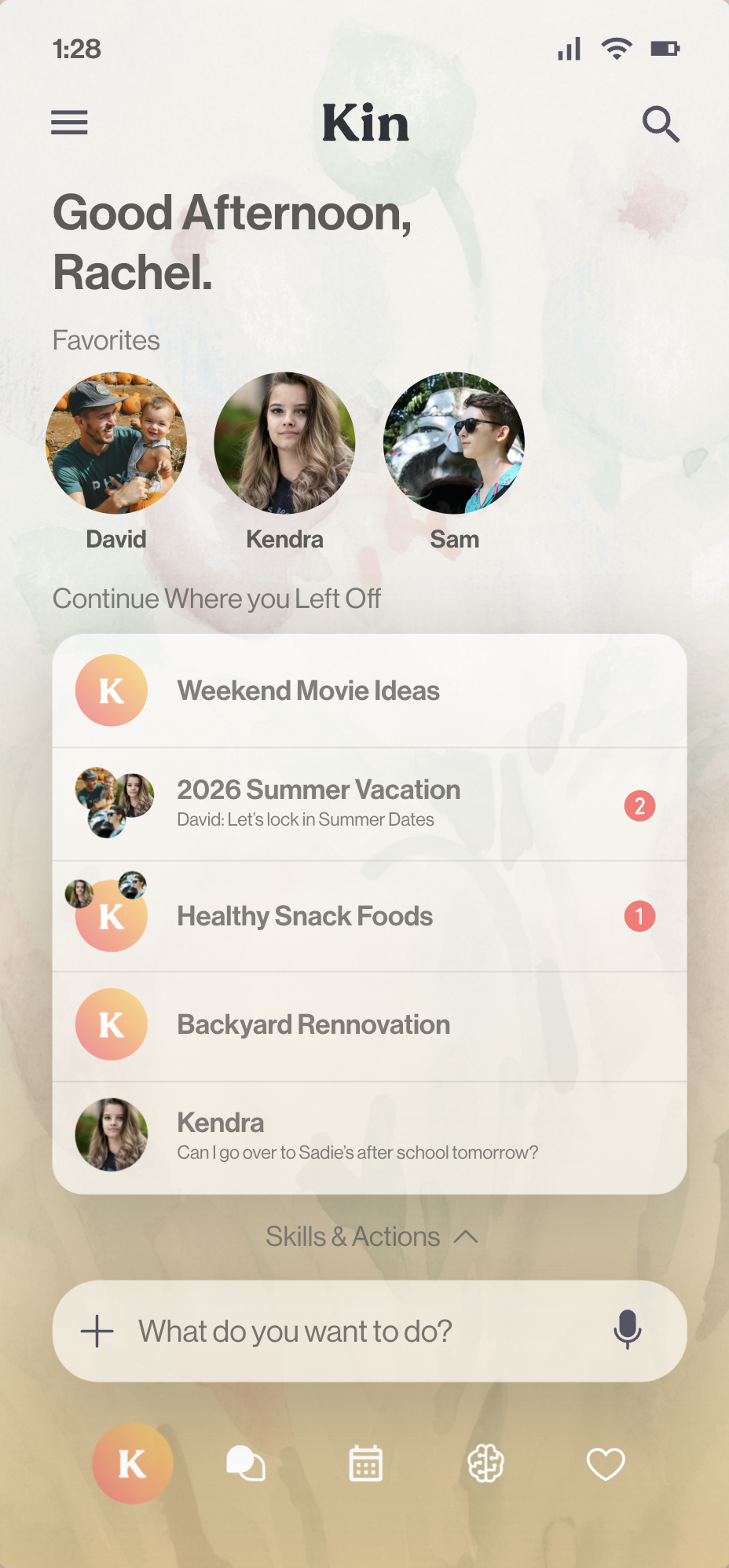

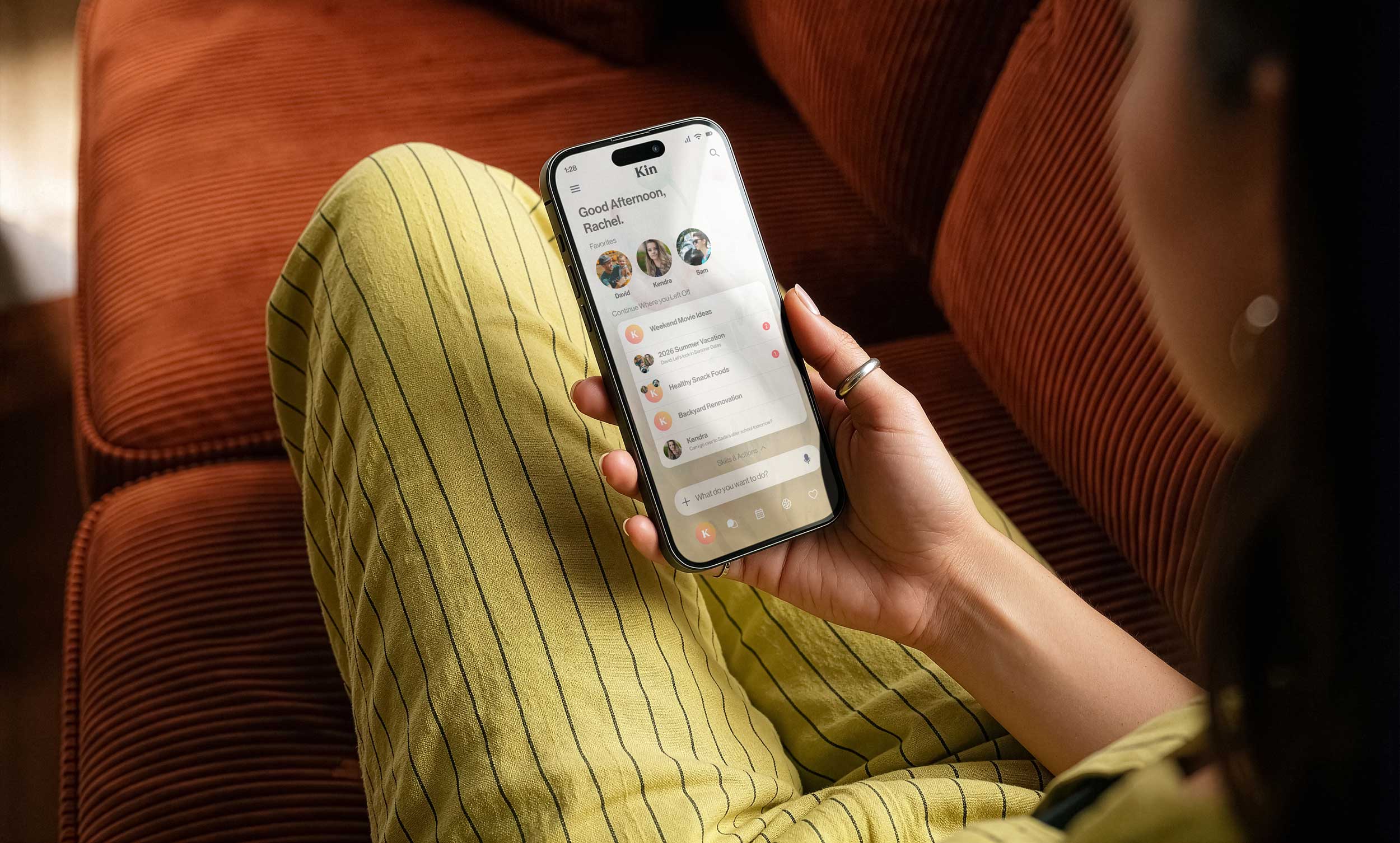
My wife and I were trying to plan a trip with our kids, and I figured AI could take some of that off our plate. It could, sort of. But every tool that came close wanted the same thing first: our calendars, our messages, the kids' schedules, basically our whole life, uploaded to a company's servers I didn't really trust. I didn't love that. So I started building something that could do the same job from a computer in our house. That turned into Kin.
Most of our family's life lives on someone else's computer.
Think about where your family's stuff actually lives. The calendars, the group chats, the notes, the questions you type into a search bar at midnight. For most of us it's the cloud, which is a nice way of saying a building full of computers that belong to someone else. For a long time that was a fair trade. It was convenient and it mostly worked.
AI makes that trade a lot bigger. These tools get better the more they know about you, so the companies running them want to know everything.
This isn't a bug. It's the business model. And it has worked spectacularly well for a small number of companies while leaving most families with less control over their digital lives than they had a decade ago.
So we built Kin to live in your house.
Kin runs on a computer in your home. Maybe one you already own, maybe a Mac mini you pick up on Marketplace and tuck on a shelf. That computer becomes your family's own private cloud. Everyone connects from their phone, whether they're in the kitchen or across the country, and everything Kin learns stays on that one machine. We never see it. We designed Kin so that we couldn't even if we tried.
That's also what lets Kin get personal. But it was never only about where the data sits. It's about who the company behind it is working for. Most tech companies make their money when your kids stay on the app longer and give up a little more of themselves every day. As a parent, I want pretty much the opposite. I'd never want an assistant that knows my kids this well answering to a company whose goals aren't mine. On a machine in our own house, it answers to us. The longer you use it, the better it knows your family, and it still works for no one but you. That's what we mean by Personal Intelligence.
Ownership
The most important technology in your life should belong to you. Not licensed to you. Not revocable when terms change. Yours.
Amplification
Technology should make you more capable, not more dependent. If it captures your attention instead of earning your trust, we built it wrong.
Restraint
Great technology disappears. It works, it helps, and it gets out of the way. We build toward that standard even when it's harder.
Longevity
We're not building for an exit. We're building something worth using for years, by people who have enough at stake to mean it.

AI image modification used to protect children's privacy.
Kin started in my house. Not as a product, not as a startup idea. As something I built because I wanted it for my own family and nothing that existed was good enough. In that sense we're customer zero. We live with this every day, and that changes how you build.
The test I keep coming back to is a simple one: would I want my kids using this when they're old enough? Not just "is it safe enough to allow" but genuinely: is this the kind of technology I want shaping how they think, how they communicate, how they understand the world? That's a much higher bar. It's the one we build to.
I grew up in the early days of the internet when technology felt like a gift. A sense that the world was opening up. That feeling is still possible. We just have to be willing to build toward it instead of against it. That's what Kin is. That's the New Standard.
Daniel Mallek, Founder & CEO, New Standard
Home made, one batch at a time.
Kin is home made. It started in our house, it runs in yours, and it's built by a small team, not a giant company. That's why we're letting families in 1,000 at a time. We'd rather help each one get set up right than hurry. Kin is free, and if this sounds like what you've been looking for, come try it.
Download Kin for Free